
The Place Where Jesus Wept Over Jerusalem
Perched on the western slope of the Mount of Olives, overlooking the breathtaking skyline of Jerusalem, stands one of the most emotional and powerful sites in the Holy Land: Dominus Flevit.
Its name comes from Latin and means “The Lord Wept.” Here, according to the Gospel of Luke, Jesus paused during His triumphal entry into Jerusalem, looked over the city, and wept.
For Christian pilgrims, Dominus Flevit is far more than a beautiful church. It is a place where prophecy, compassion, sorrow, and the heart of Christ come together in a deeply moving experience.
“As He Drew Near… He Wept”
The site is connected to the powerful passage in Luke 19:41–44:
“And when he drew near and saw the city, he wept over it…”
From this very slope of the Mount of Olives, Jesus would have looked directly toward the Temple Mount and the city of Jerusalem spread before Him. Seeing the city, He lamented that the people had not recognized “the things that make for peace.”
He then foretold the destruction of Jerusalem:
“They will not leave one stone upon another in you, because you did not know the time of your visitation.”
For many visitors, standing at Dominus Flevit and reading these verses while gazing over Jerusalem creates one of the most unforgettable moments of a pilgrimage to Israel. The connection between Scripture and geography becomes strikingly real.
A Church Built Like a Tear
The present church was designed by the renowned Franciscan architect Antonio Barluzzi and completed in 1955 under the care of the Franciscan Custody of the Holy Land.
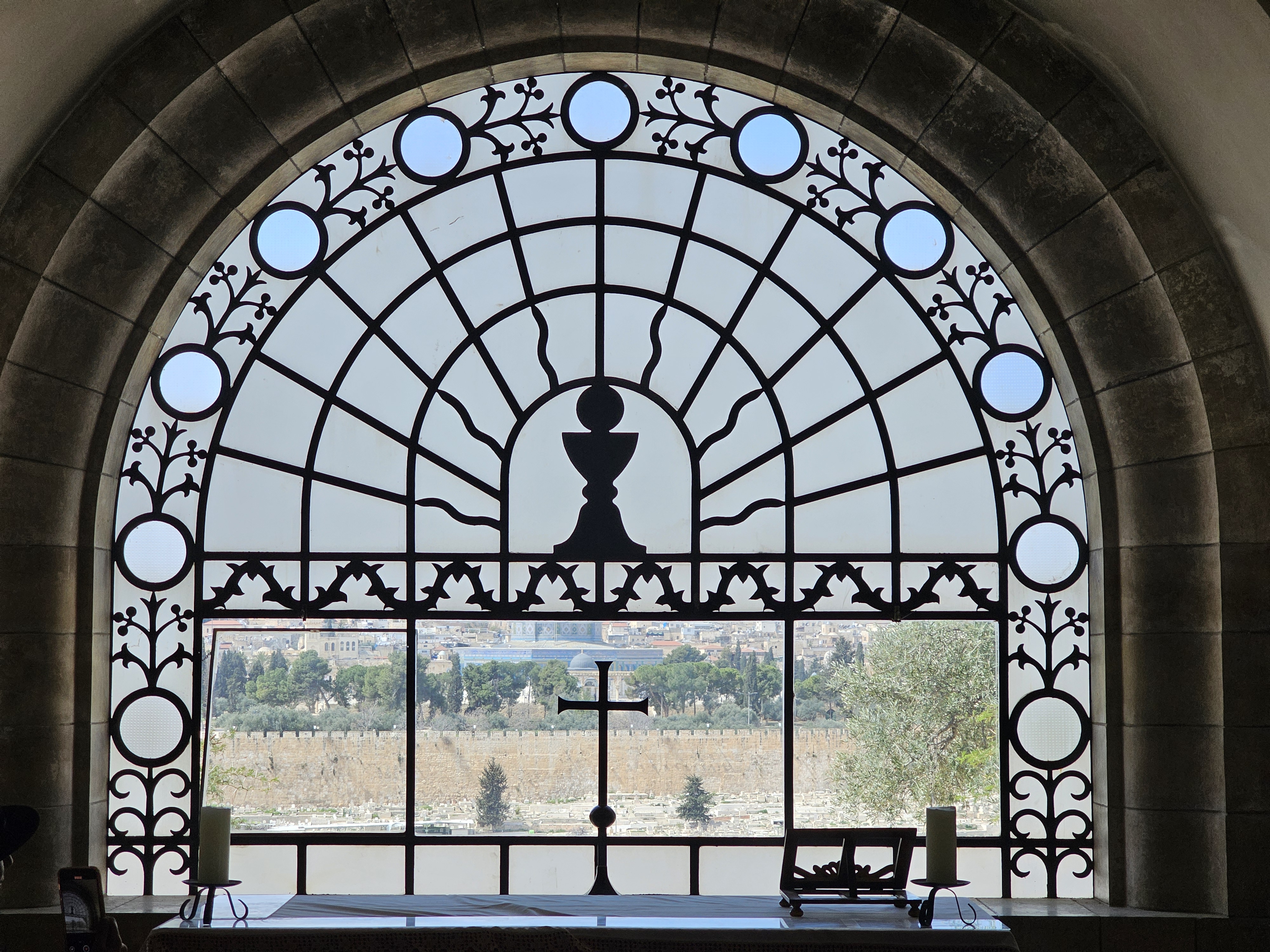
Unlike many grand churches in Jerusalem, Dominus Flevit is intentionally simple and symbolic. Its entire structure is shaped like a teardrop, representing the tears of Christ over the city He loved.
Inside, the atmosphere is quiet and reflective. The church invites visitors not only to observe, but to pause and meditate on the compassion of Jesus.
One of the most remarkable features is the large window behind the altar. Framed perfectly within the window is the spectacular view of the Old City, including the golden dome of the Dome of the Rock. Worshippers see the same view Jesus would have seen when He wept over Jerusalem nearly 2,000 years ago.
It is one of the most photographed and spiritually moving views in all of Jerusalem.
Layers of History Beneath the Church
Dominus Flevit is not only spiritually significant—it is also archaeologically rich.
Excavations around the church uncovered a Jewish necropolis dating to the late Second Temple period (1st century BCE – 1st century CE). Rock-cut kokhim tombs were discovered beneath and around the site, showing that this hillside was once part of an ancient Jewish cemetery.
Archaeologists also discovered numerous ossuaries—stone bone boxes used in Jewish burial customs during the time of Jesus. Several bear inscriptions in Hebrew, Aramaic, and Greek, including common Jewish names such as Shimon and Mariam.
These discoveries provide a vivid glimpse into Jerusalem during the lifetime of Jesus.
The site also preserves remains of a Byzantine church and monastery from the 5th century CE, evidence that early Christians already venerated this location as the place where Jesus wept. Beautiful mosaic floors with floral and geometric patterns can still be seen today under glass panels and in the courtyard.
Pottery, oil lamps, and crosses found during excavations testify to centuries of Christian pilgrimage and worship on this sacred hillside.
A Place of Reflection and Prophecy
Dominus Flevit carries a unique emotional weight among the holy places of Jerusalem.
Many pilgrimage sites celebrate miracles, resurrection, victory, or proclamation. Dominus Flevit reveals something deeply personal: the sorrow and compassion of Christ.
Here, visitors encounter Jesus not only as teacher and king, but as one who mourned over humanity’s blindness and suffering.
The site also reminds pilgrims of the historical fulfillment of Jesus’ prophecy. In 70 CE, Jerusalem was destroyed by the Romans during the suppression of the Jewish revolt, just as Jesus foretold in Luke’s Gospel.
Standing at Dominus Flevit today, visitors often reflect on themes of peace, repentance, God’s faithfulness, and the longing of Christ for humanity to know Him.
Why Every Christian Pilgrim Should Visit Dominus Flevit
A visit to Dominus Flevit is unlike any other stop in Jerusalem.
It combines:
- A direct connection to the life of Jesus
- One of the most spectacular panoramic views in Israel
- Deep prophetic and biblical significance
- Fascinating archaeological discoveries
- A quiet atmosphere for prayer and reflection
For many believers, this becomes one of the most personal moments of their journey through the Holy Land.
As you stand before the window overlooking Jerusalem, reading the words of Luke 19, the Bible suddenly feels alive in a profound and unforgettable way.